Rowhouse Chimneys: What Philadelphia Row and Twin Home Owners Need to Know
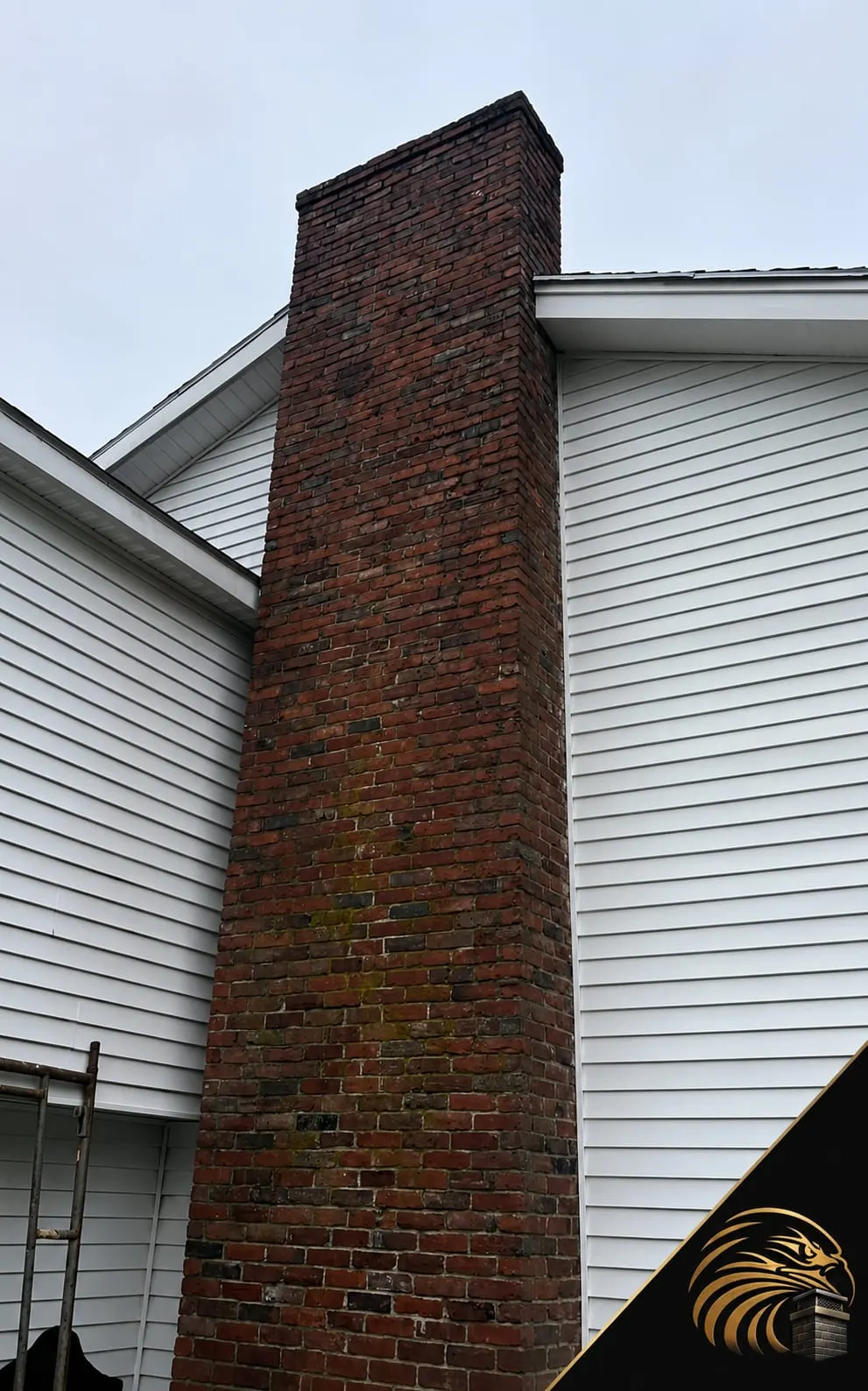
Philadelphia is a city of rowhomes — hundreds of thousands of them, from South Philly brick rows to Northeast twins — and their chimneys play by different rules than a freestanding suburban stack. The chimney rises from a party wall it shares with a neighbor, its base is usually buried in a basement or a closet, and in most older rows it carries the furnace flue as well as the fireplace. Here is what that means for the person who owns one.
Your chimney is half your neighbor's problem too
A party-wall chimney serves one home, but the masonry sits on the line between two. Water entering a cracked crown on your side can show up as a stain on your neighbor's ceiling; a stack that leans or sheds mortar is a hazard to both roofs. It also means access matters: many rowhouse chimneys can only be reached from one roof, and the work has to be coordinated with care around skylights, solar panels and the neighbor's flashing. When we inspect a rowhouse chimney, we document the shared sections with photos — useful for you, and useful if a conversation with the neighbor ever needs evidence instead of opinions.
The flue you cannot see is the one working hardest
In most pre-war rows, the fireplace was coal, the furnace is oil or gas, and both flues live in the same stack. The heating flue runs thousands of hours a year. Oil soot and acidic condensate eat clay tile from the inside, and because there is no fireplace opening to glance up, nobody looks at that flue for decades. The first symptom is often carbon monoxide alarms, a furnace that soots, or a chimney sweep finding the liner gone at the bottom. A camera inspection of the heating flue is the single highest-value check on an older Philadelphia home — before a relining emergency chooses its own timing in the middle of winter.
Flat roofs, parapets and the leak that is not the roof
Many rows end in a flat or low-slope roof with the chimney rising through a parapet. The junction where stack meets roof membrane is a leak factory: flashing details differ from a pitched shingle roof, and roofers and chimney masons each tend to blame the other's half. The honest diagnosis is from above — crown, cap, top courses of mortar and the flashing line, photographed in one visit. A surprising share of "roof leaks" in rowhomes are chimney-top leaks that a roofer cannot fix and a sweep can.
Caps end the wildlife era
An uncapped rowhouse flue in the city is an open invitation — starlings and sparrows in spring, squirrels in the fall, and raccoons that treat a warm flue as a den and can end up in the fireplace. Because rows are connected, one animal problem often tours the whole block. A fitted stainless cap, sized to the flue and fastened for city wind, ends it permanently — and keeps rain off the damper and out of the furnace flue at the same time.
The bottom line
Rowhouse chimneys need three habits: an annual look at the top, a camera check of the heating flue every few years (and before any furnace replacement), and a cap that actually exists. Eagle Chimney Services works on rowhomes and twins across Philadelphia and the inner suburbs every week — call (855) 424-6217 and we will show you, with photos, exactly what your stack looks like from the roof.
Need a Hand With Your Chimney?
Call (855) 424-6217 — phones answered 24/7, service Sunday through Friday across 165 Pennsylvania communities.